
OIL AND GAS
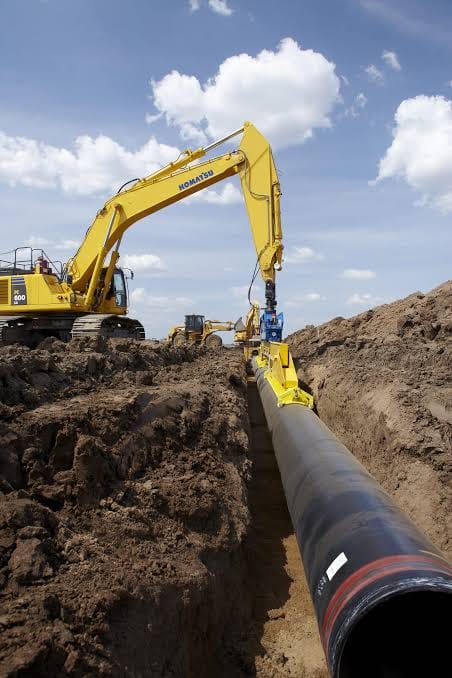
At Vex Engineers Ltd., we carry out end-to-end design and execution process of oil and gas pipelines moving from initial concept and route selection through Front-End Engineering Design (FEED), detailed engineering, procurement, construction, and commissioning. This lifecycle ensures structural integrity, economic viability, and strict regulatory compliance.
Conceptual Design & Feasibility
- Feasibility Studies: Evaluate economic, technical, and environmental viability.
- Route Selection: Map optimal paths using satellite data and surveys to avoid populated areas, unstable ground, and environmental hotspots.
- Design Basis: Define fluid composition, expected flow rates, operating pressures, and temperatures.
Front-End Engineering Design (FEED)
- Hydraulic & Thermal Profiling: Simulate steady-state and transient flow behavior to determine optimal pipe diameter.
- P&IDs: Develop Piping and Instrumentation Diagrams to outline process flow and control configurations.
- HAZOP Studies: Conduct Hazard and Operability reviews to mitigate safety risks.
- Long-Lead Items Identification: Order specialized materials like heavy-wall line pipes and compressors early.
Detailed Engineering
- Mechanical Calculations: Compute required wall thickness, material grades (e.g., API 5L), and anti-corrosion coating specifications per codes like ASME B31.4 (liquid) or ASME B31.8 (gas).
- Stress Analysis: Perform buried or subsea pipeline stress analyses for thermal expansion and soil interaction.
- Crossings & Appurtenances: Design specialized trenchless road/river crossings (HDD) alongside block valves and pig trap stations.
Procurement & Construction
- Procurement (Sourcing): Secure line pipes, valves, welding consumables, and coatings with strict quality control.
- Right-of-Way (ROW) Preparation: Clear land, grade the path, and string pipe segments.
- Welding & NDT: Assemble segments via field welding followed by non-destructive testing (ultrasonic/radiographic) and joint coating.
- Lowering-in & Backfilling: Place the coated pipe into the trench and cover with padding soil.
- Hydrostatic Testing: Pressurize segment intervals with water to verify structural integrity and leak tightness.
Commissioning & Handover
- Cleaning & Drying: De-water, gauge, and dry the pipeline utilizing specialized pigs and nitrogen purging.
- SCADA Integration: Tie field instrumentation and emergency shutdown systems into control rooms.
- Pre-Startup Safety Review (PSSR): Perform final audits prior to introducing hydrocarbons
- Download OIL_GAS PDF